The most valuable single skill
The flashlight trick, done properly
It works on the hardest target: a camera that's turned off, recording only to a memory card, invisible to any network scan. Optics don't lie — a lens is a lens, and a lens reflects light.
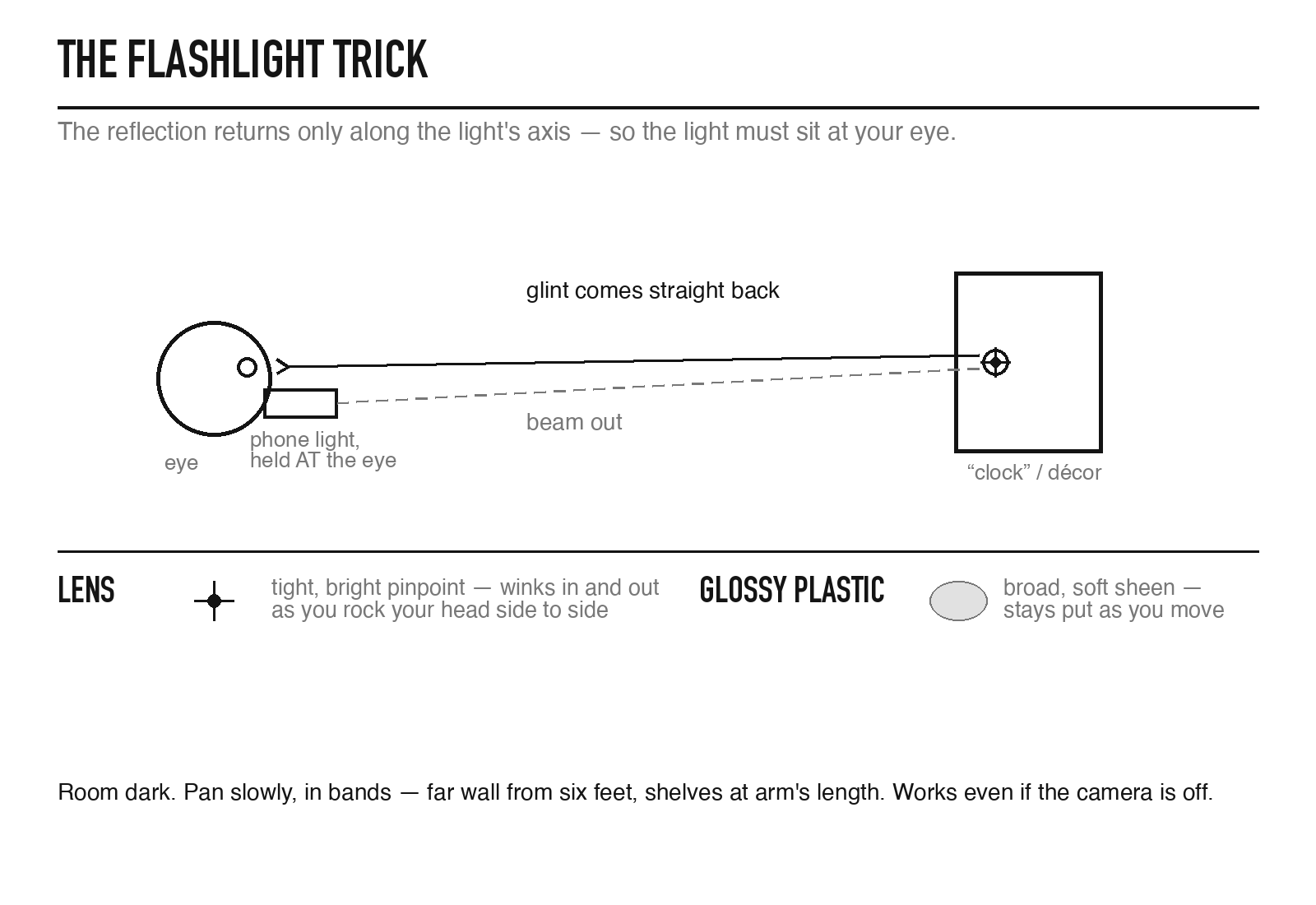
Why it works
A camera lens is curved glass built to gather light. Shine a focused light at it from the same axis your eye is on and it throws a sharp point of light straight back — the same reason animal eyes shine in headlights. No electronics required on the camera's side.
The technique
- Get the room dark. Curtains closed, lights off. Contrast is everything.
- Hold the light beside your eye. The reflection only returns along the light's axis — your eye has to be almost on that axis to catch it. This is the step everyone skips, and it's the whole trick.
- Pan slowly, in bands. Sweep the wall opposite the bed from six feet out, then step in and do the nightstand and shelves at arm's length. A 2–3 mm lens throws a glint you'll miss from across the room and can't miss from four feet.
- Confirm with movement. A real lens glint is tight and bright, and it winks in and out as you rock your head side to side.
Things that will fool you
- Screw heads and polished metal — broad, soft shine that stays put as you move.
- Infrared LEDs on legitimate security gear — a dull dark-red circle, a source, not a glint.
- Glossy black plastic — TV fronts, remotes, soundbars reflect beautifully. Ask the sightline question: is this thing where it belongs, doing the job it looks like it does?
- Smoke-detector test lights blink on a slow rhythm. A steady pinpoint that tracks your movement is worth thirty more seconds.
The book pairs this with the sightline system it depends on. The complete system — every check on this site plus the ten-minute walkthrough, audio devices, your legal rights, and what to do if you find something. 47 printable pages, instant download, keep it on any device.